Decoration

The Rolex June 2026 Price Hike: Strategic Insights, Metal Demarcation, and the Emerging Grey Market Delta

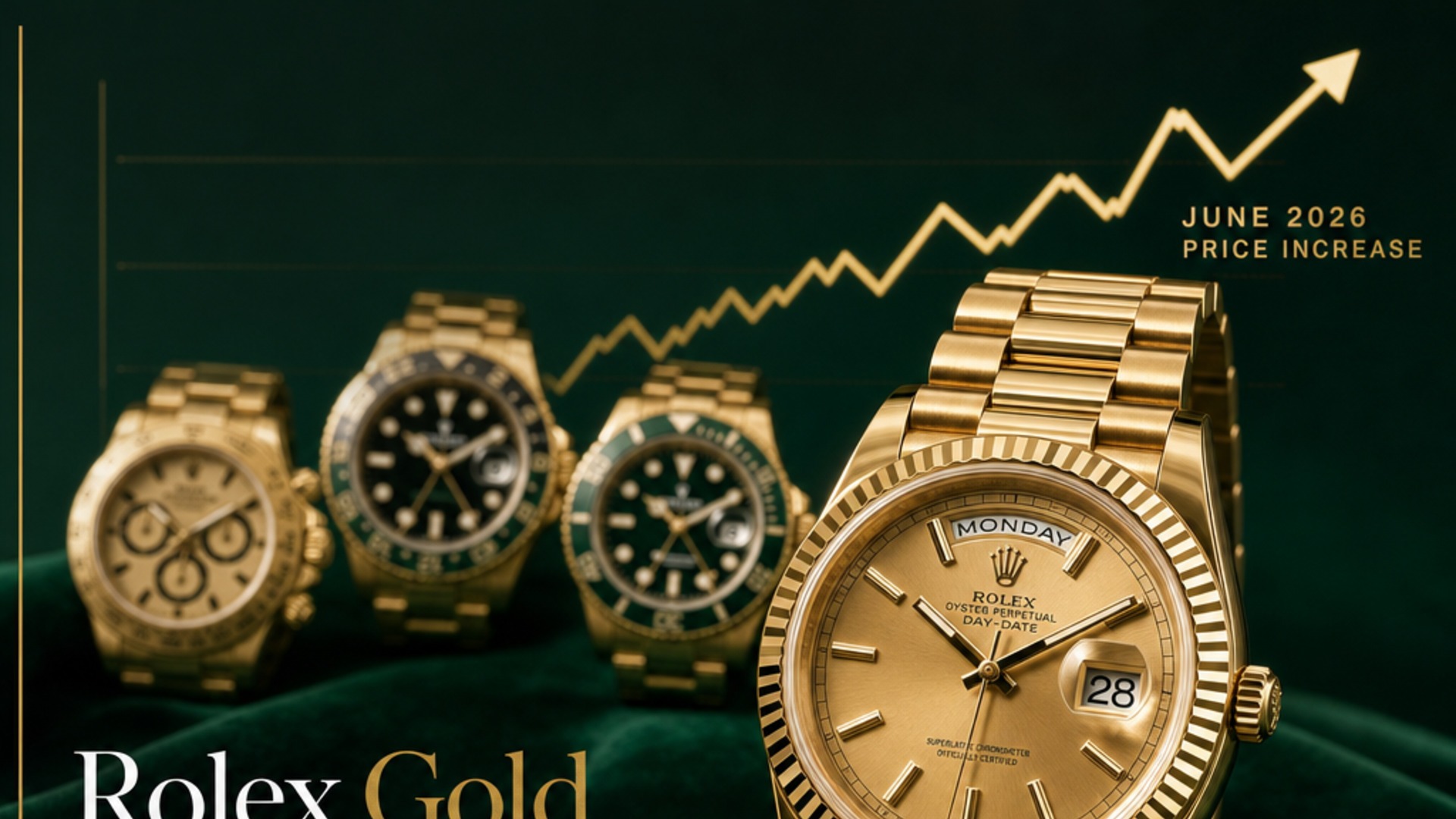
On June 1st, 2026, Rolex instituted its second major retail price adjustment of the year. Following a broad ~7% average increase in January, this mid-year move caught the horological community off guard not because of its scale, but because of its surgical precision. 

Unlike previous sweeping price updates, Rolex’s June 2026 strategy is defined by clear material demarcation: stainless steel and titanium (RLX) models remained completely untouched, while price increases were exclusively and aggressively funneled into **all-gold (precious metal)** and **two-tone (Rolesor)** references.

For collectors, alternative builders, and market observers alike, this targeted shift alters the landscape of modern watch procurement. Below, we break down the critical data, the macro-economic forces driving this decision, and how it impacts the pricing delta across the primary and secondary markets.

1. The Core Data: Two-Tone vs. Full Gold Adjustment

The pricing strategy behind the June 2026 hike follows a strict tiering system based on gold weight and material execution:
*   **Full Gold Models (Yellow, White, and Everose Gold):** Experienced a premium retail increase ranging between **4.8% and 5.2%**.
*   **Two-Tone / Rolesor Models (Steel & Gold combinations):** Received a softer adjustment of **2.1% to 2.8%**.
*   **Stainless Steel & Platinum Models:** Experienced **0% change**, remaining at their January 2026 retail baselines.

### Selected Key Reference Price Movements (USD / EUR):

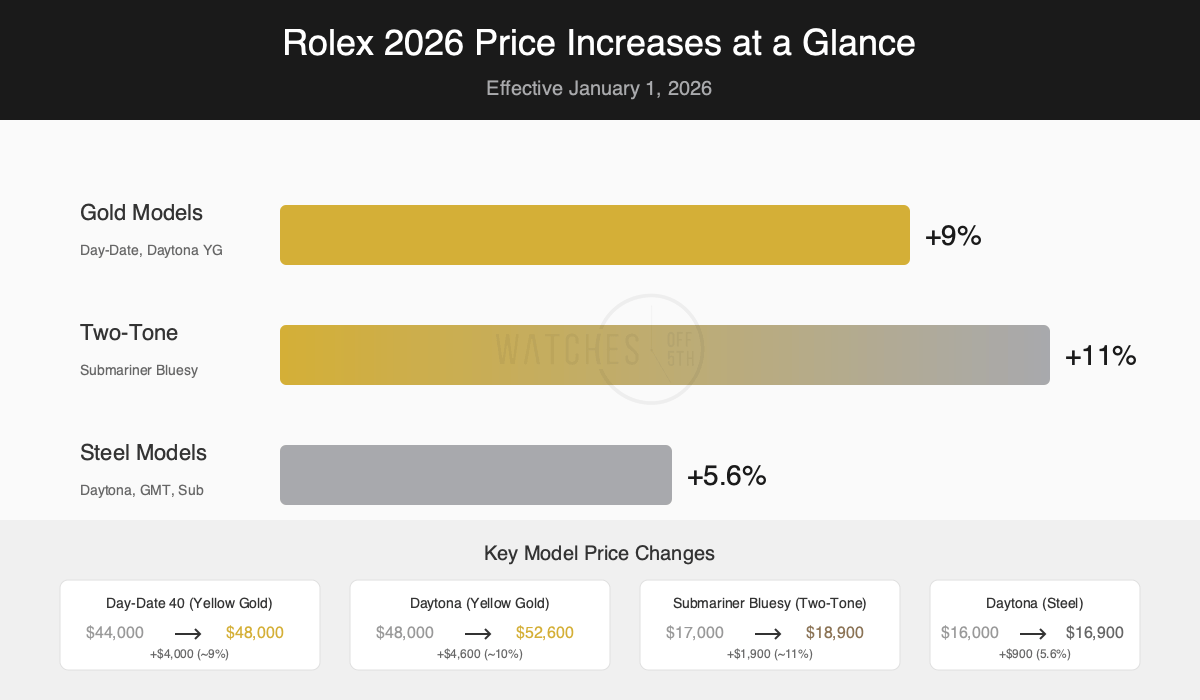
| Reference / Model | Prior Retail (Jan 2026) | New June 2026 Retail | Net Increase (%) |
| :--- | :--- | :--- | :--- |
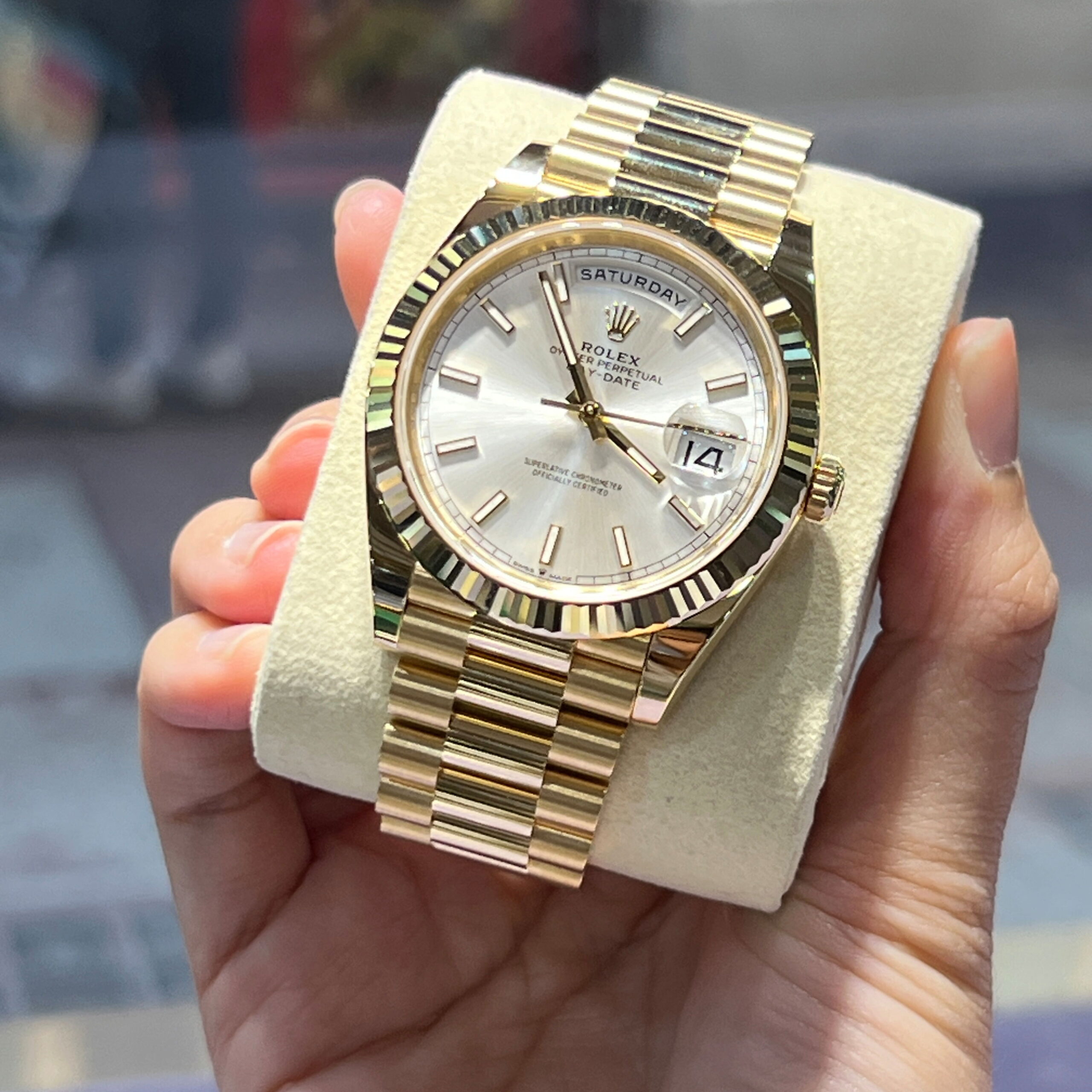
| **Day-Date 36 (Yellow Gold Ref. 128238)** | $43,700 | **$45,900** | +5.03% |
| **Submariner Date (Yellow Gold Ref. 126618LB)** | $48,600 / €48,000 | **$50,900 / €50,300** | +4.73% |
| **Cosmograph Daytona (Yellow Gold / Oysterflex Ref. 126518LN)** | €40,100 | **€42,200** | +5.24% |
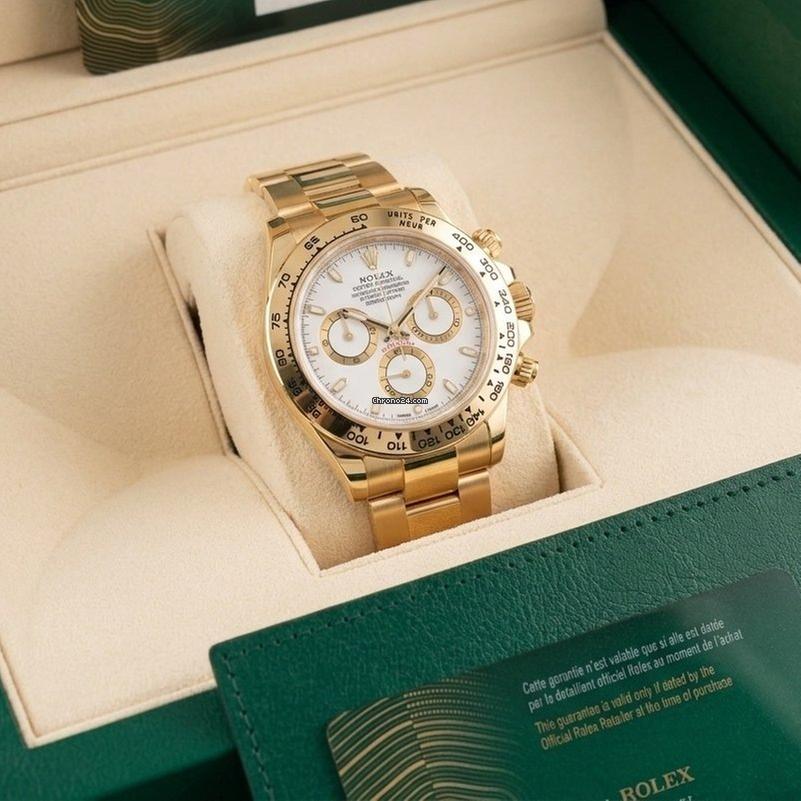
| **Cosmograph Daytona (Full Yellow Gold Ref. 126508)** | €52,000 | **€54,600** | +5.00% |
| **GMT-Master II (Rolesor / Two-Tone Ref. 126713GRNR)** | €19,750 | **€20,150** | +2.02% |
| **Yacht-Master 42 (White Gold Ref. 226659)** | $31,000 | **$32,500** | +4.84% |
| **Perpetual 1908 (White Gold Ref. 52509)** | $28,800 | **$30,300** | +5.21% |

*Note: Even highly anticipated 2026 releases that debuted just months ago at Watches & Wonders—such as the newly configured precious metal GMTs and Everose dress models—have transitioned directly to these elevated pricing tiers before hitting boutique shelves in volume.*

---


## 2. Behind the Red Line: Why Rolex Targeted Precious Metals

By implementing a dual-tariff style pricing structure mid-year, Rolex is addressing three distinct commercial realities:

### A. Raw Material Cost Hedging
While spot gold prices undergo standard market cycles, the macro-trend over the past 24 months has shown a massive upward shift in gold valuation across both Euro and USD denominations. For fully solid gold models (utilizing solid links, thick monobloc cases, and heavy clasps), the raw material cost represents a massive portion of the overall production margin. To preserve its legendary gross margins, Rolex chose to directly pass these commodity premiums onto the consumer.

### B. The "Rhodium Factor" in White Gold
Interestingly, certain white gold references (such as the white gold GMT-Master II) experienced outliers of up to **8% increases** (moving from $50,700 to $54,700). White gold models undergo rhodium plating to achieve their brilliant, ultra-white mirror finish. Rhodium spot prices have historically experienced extreme volatility, recently doubling over a 12-month period. Rolex’s pricing reflects the compounding overhead of securing these incredibly rare plating elements.

### C. Shifting Demographics and Hyper-Luxurization
As the broader global luxury market experiences a normalization phase, aspirational middle-class buyers are tightening their discretionary spending. Rolex recognizes this. By keeping entry-level stainless steel models stable, they keep the aspirational pipeline alive. Meanwhile, they aggressively price up solid gold models, knowing that ultra-high-net-worth individuals (UHNWIs) are largely immune to economic fluctuations. This effectively pushes the brand further into the true "haute luxury" bracket.

---

## 3. The Grey Market Paradox: A Window of Opportunity

The most fascinating byproduct of the June 2026 price hike is the widening **price inversion (or delta)** between official boutique retail and secondary market pricing.

Traditionally, modern Rolex sport models trade at a premium on the secondary market. However, for solid precious metal references, the opposite is currently true. 

Take the **Submariner Date in solid Yellow Gold (Ref. 126618LB "Blueberry")**:
*   **New AD Boutique Price:** $50,900 (plus local taxes, pushing it past $55,000 in many jurisdictions).
*   **Average Secondary/Grey Market Price (Unworn/Mint):** Hovering between **$44,000 and $46,000**.

This creates a stark reality: **It is currently thousands of dollars cheaper to source a brand-new, fully stickered solid gold Rolex from reputable secondary dealers than it is to buy one at retail from an Authorized Dealer (AD).** 

Because grey market dealers operate on existing inventory bought at older wholesale pricing, they will not instantly raise their prices by 5%. This lag offers a highly lucrative window of opportunity for collectors looking to acquire heavy gold assets at a substantial discount relative to the new MSRP.
## 4. Strategic Playbook for Collectors in late 2026

For those looking to navigate this new financial layout, three paths stand out:

1.  **Pivot to Stainless Steel at ADs:** 
    Since steel models did not receive a price increase, their inherent value proposition has actually grown. Sourcing a steel Cosmograph Daytona (Ref. 126500LN) or Submariner (Ref. 124060) at MSRP remains the gold standard for instant equity retention, as their secondary premiums remain robust while their cost of entry did not budge.
2.  **Target Rolesor (Two-Tone) for Everyday Luxury:** 
    With only a marginal ~2% increase, two-tone models (such as the GMT-Master II "Rootbeer" or "Guinness") represent an exceptional middle ground. You gain the presence of Rolex's proprietary gold alloy without absorbing the heavier price hikes targeted at the all-gold catalog.
3.  **Explore the High-Quality Custom Mod Scene:**
    With genuine gold prices skyrocketing past the $50k mark, enthusiast interest in premium custom watch builds and high-caliber "homage" modifications has surged. Utilizing the same 316L stainless steel, sapphire crystals, and reliable workhorse automatic movements, modern custom watchmaking allows collectors to enjoy iconic luxury aesthetics and heavy-duty durability without the prohibitive five-figure luxury brand tax.

---

## Final Verdict

Rolex's June 2026 premium gold adjustment is a masterclass in market segmentation. It protects the entry-level enthusiast while solidifying the brand's position as a financial safe haven for elite collectors. For the savvy buyer, the key to success lies in looking beyond the boutique display window, identifying the pricing gaps in the secondary market, and appreciating the incredible craftsmanship of modern watchmaking—regardless of the retail tag attached to it.
Praesent Iaculis sitĀ Vehicula
Lap. 4Ā TellusĀ A17-B27

Leave a Reply

Your email address will not be published. Required fields are marked *